
The strategic value of bio-districts
The strategic value of organic farming districts: how organic agriculture shapes territorial regeneration
When we talk about organic farming, we are accustomed to thinking about cultivation techniques, the reduction of synthetic chemical inputs, and the quality of agricultural products. Yet we rarely stop to consider an issue that I believe is fundamental: why do we continue to design sustainability primarily within the boundaries of individual farms, when many of the ecological processes we seek to protect extend far beyond those boundaries?
It is precisely with this question, in my view, that we should begin if we are to understand the strategic value of Biodistricts.
Biodistricts should not simply be associations of organic farms, nor should they be merely tools for promoting and marketing local products. Rather, they should be entities capable of contributing to the ecological, economic and social transformation of an entire territory.
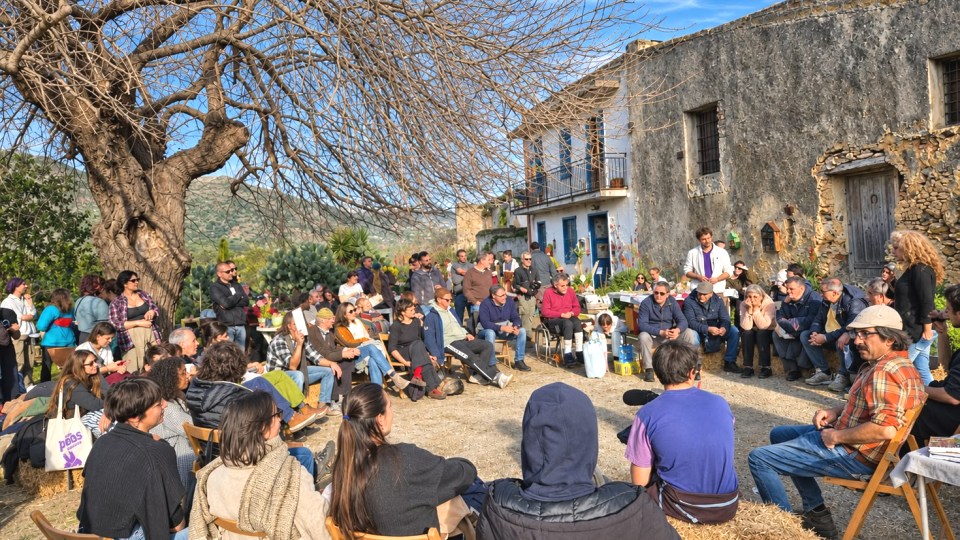
A Biodistrict, at least in its fullest expression, should represent a territorial system in which farmers, citizens, local authorities, schools, associations, businesses and scientific institutions work together to develop a shared vision of local development.
Organic farming provides the starting point; territorial regeneration should be one of its primary objectives.
The real innovation of the Biodistrict lies in moving beyond the boundaries of individual farms and addressing the ecological, economic and social relationships that determine how an entire territory functions.
Let us take biodiversity, for example.
An organic farm may adopt particularly environmentally sound practices, improve soil fertility, increase organic matter, promote local varieties and encourage beneficial organisms. However, the results it can achieve in the long term will also depend on what happens on neighbouring farms and on the presence of hedgerows, small woodlands, waterways, natural areas and ecological corridors.
The organisms involved in biological pest control do not recognise cadastral boundaries. The same applies to water and to many ecological processes that constantly cross property boundaries.
This is why sustainability should not be regarded solely as a characteristic of an individual farm, but also as an emergent property arising from the ecological, economic and social interactions within the wider territorial agroecosystem.
A meta-analysis published in 2026 in Nature Communications highlighted how agricultural diversification can deliver long-term benefits for biodiversity, soil fertility, pollination, carbon sequestration and farm profitability (Raveloaritiana & Wanger, 2026).
Naturally, the study focuses on agricultural diversification and does not directly measure the effects of Biodistricts. Nevertheless, it provides a scientific basis for understanding why coordinating agroecological practices at territorial scale may represent a promising strategy.
Biodistricts should become territorial agroecological laboratories in which coordinated interventions can be tested to restore soil fertility, manage water resources rationally, conserve local varieties and rebuild both structural and functional biodiversity.
I am thinking, for example, of creating networks of hedgerows and ecological buffer strips between neighbouring farms, restoring degraded areas, sharing organic matter management practices, enhancing soil microorganisms and testing nature-based solutions using resources already available within farms themselves.
In many cases, expensive technologies are not required. What is needed above all is knowledge, the ability to observe, collaboration and an organisational structure capable of connecting different experiences.
This approach is particularly valuable in Mediterranean regions, where drought, erosion, the loss of organic matter and the progressive simplification of agricultural landscapes are undermining the resilience of agroecosystems.
In 2026, a study published in Biodiversity and Conservation, focusing on the Biodistricts of Lazio, highlighted the importance of integrating agricultural planning with habitat protection, ecological connectivity and sustainable landscape management (Servadei et al., 2026).
There is also another dimension that I consider equally strategic: the economic one.
Too often, we ask farmers to become more sustainable without changing the economic conditions in which they operate. We promote environmentally sound practices, reduced input use and biodiversity conservation, while many farms continue to face rising costs, fragmented supply chains, limited bargaining power and markets over which they have very little control.
We cannot expect a lasting ecological transition without making it economically viable as well.
A Biodistrict should help change these conditions through cooperation between farms, the sharing of services and equipment, local processing of agricultural products, technical training and the organisation of supply chains capable of retaining a greater share of economic value within the territory.
A study published in 2026 identified a positive relationship between membership in Biodistricts and growth in agricultural labour productivity (Grazini et al., 2026).
This finding suggests that territorial networks, knowledge exchange and the economies of scale and cooperation generated by collective organisation can contribute to farm competitiveness.
However, the opportunities offered by Biodistricts go far beyond the marketing of organic products.
A Biodistrict should promote the development of a territorial system in which waste from some farms can become a resource for others, where compost, soil amendments and natural biostimulants are produced, and where pruning residues and plant biomass are valorised through processes that are compatible with environmental safety.
It should be a territory in which the circular bioeconomy does not remain merely a theoretical principle, but becomes an everyday practice, particularly through low-tech solutions that are simple and accessible to farmers.
All this should be complemented by sustainable tourism, social farming, cultural activities, food processing, ecosystem services and vocational training programmes.
Economic value would no longer derive exclusively from the quantity of products placed on the market, but also from the territory’s ability to conserve, regenerate and enhance its own resources.
Another aspect that is often underestimated is the relationship between agriculture, food and health.
We are accustomed to assessing food quality through its nutritional content. Yet every food product comes from a biological system that has interacted with a specific soil, its soil microbiota, climatic conditions and the agricultural practices adopted throughout the production cycle.
These interactions can influence the composition of the food matrix, the profile of plant metabolites and, potentially, the ways in which certain substances become available to and are utilised by the human body.
Biodistricts should become ideal settings for investigating the relationships between agroecological management, soil fertility, microbiology, food matrix quality and consumers’ physiological responses, while promoting collaboration among agronomists, nutritionists, physicians and researchers.
I am also thinking of school canteens, hospitals and institutional catering services, which could provide a practical link between agricultural production, food education and public health.
A study conducted in the Cilento Biodistrict analysed the organisational conditions and relationships between producers and institutions needed to promote the supply of school canteens through local organic supply chains, highlighting both the opportunities and the operational challenges involved (Kraljevic & Zanasi, 2023).
In my view, the objective should not simply be to produce and consume more organic food, but to understand how to design production and food systems capable of supporting ecosystem functioning, food security and the well-being of communities.
Finally, there is a social and cultural dimension that we cannot afford to overlook.
Anyone familiar with rural areas knows that the abandonment of the countryside does not simply mean the loss of farms or cultivated land.
With the disappearance of older generations of farmers, we risk losing local varieties, cultivation techniques, knowledge rooted in the territory, the ability to interpret seasonal patterns and resource management practices developed through generations of observation and experience.
This is not about idealising the past. Many traditional practices represent a valuable body of knowledge that deserves to be studied, compared with scientific research and brought back into use.
Biodistricts can help keep this knowledge alive by creating opportunities for training, employment, generational renewal and participation by local communities.
However, it is important to emphasise that a Biodistrict does not automatically become sustainable simply because it is established, officially recognised or funded.
Despite farmers’ interest in agroecology, significant practical barriers remain, including the need to adapt agricultural equipment and the shortage of qualified technical support (Dara Guccione et al., 2024).
The agroecological transition therefore requires much more than simply joining a territorial initiative. It calls for expertise, continuous training, technical assistance and applied research capable of turning objectives into concrete interventions and measurable outcomes.
It is essential to monitor, over time, changes in soil fertility, functional biodiversity, dependence on external inputs and the economic resilience of farms, without overlooking another equally important indicator: the actual participation of citizens in decisions affecting their territory.
Simply belonging to a Biodistrict, therefore, does not automatically guarantee more sustainable practices.
For this reason, I believe a further qualitative leap is necessary.
Biodistricts should evolve from being primarily identity-based, organisational or commercial initiatives into genuine territorial infrastructures for agroecological innovation, training, applied research and community development.
They should be territories in which farmers are not merely recipients of technical recommendations, but active participants in experimentation and knowledge production. Territories in which universities do not limit themselves to studying agricultural systems, but work alongside those who manage them every day. Territories in which public authorities recognise that landscape protection, soil fertility and water availability are also fundamental to the economic and social resilience of communities.
Organic certification alone is not enough. A certified farm may continue to operate within a simplified landscape, remain heavily dependent on external inputs or be economically fragile.
It is the integration of agroecological practices, biodiversity, economic cooperation and social participation that can help transform farm-level sustainability into territorial regeneration.
And this is where the strategic value of Biodistricts becomes clear.
It lies in their ability to rebuild the connections that agricultural specialisation has progressively weakened.
Connections between farms and landscapes, between biodiversity and production, between the economy and communities, between food and health, and between traditional knowledge and scientific research.
The future of agriculture must not depend solely on our ability to make individual farms sustainable, but also on our capacity to build territories in which farms can cooperate and interact with the ecosystems and communities around them.
From this perspective, the Biodistrict can become something far more important than a territorial organisation of organic farming.
It can represent a new way of understanding the relationship between agriculture, the environment, the economy and society.
A territory is not regenerated simply by changing the way it is farmed. It is regenerated when the relationships between those who cultivate it also change.
Francesco Di Lorenzo
Agronomist and Nutritionist
Essential References
Dara Guccione, G., Viganò, L., Sturla, A., Vaccaro, A., Colombo, L., Pirelli, T., & Varia, F. (2024). Insights into the agroecological transition: The case of two Italian bio-districts. Italian Review of Agricultural Economics, 79(1), 97–111. https://doi.org/10.36253/rea-14241
Di Veroli, J. N., Peronti, B., Scognamiglio, U., Baiamonte, I., Paoletti, F., Stefanovic, L., Bügel, S. G., Aboussaleh, Y., Średnicka-Tober, D., & Rossi, L. (2024). Food waste behaviors of the families of the Cilento Bio-District in comparison with the national data: Elements for policy actions. Frontiers in Sustainable Food Systems, 8, Article 1385700. https://doi.org/10.3389/fsufs.2024.1385700
Grazini, C., Guarini, G., & Sturla, A. (2026). The role of Biodistricts in enhancing farms’ labour productivity: A Post-Keynesian analysis. Bio-based and Applied Economics, 15(3), 29–41. https://doi.org/10.36253/bae-18332
Komati, N., Cravedi, J.-P., Lecerf, J.-M., Belzunces, L. P., Tailliez, D., Chambrier, C., Calvarin, J., & Amiot, M.-J. (2025). Potential health benefits of a diet rich in organic fruit and vegetables versus a diet based on conventional produce: A systematic review. Nutrition Reviews, 83(3), e1101–e1114. https://doi.org/10.1093/nutrit/nuae104
Kraljevic, B., & Zanasi, C. (2023). Drivers affecting the relation between biodistricts and school meals initiatives: Evidence from the Cilento biodistrict. Frontiers in Sustainable Food Systems, 7, Article 1235871. https://doi.org/10.3389/fsufs.2023.1235871
Packer, G., Zanasi, C., & Rota, C. (2026). Bio-districts and rural vitality: Governance, place-based practices, and structural constraints in Italy and Sweden. Frontiers in Sustainable Food Systems, 10, Article 1872987. https://doi.org/10.3389/fsufs.2026.1872987
Passaro, A., & Randelli, F. (2022). Spaces of sustainable transformation at territorial level: An analysis of biodistricts and their role for agroecological transitions. Agroecology and Sustainable Food Systems, 46(8), 1198–1223. https://doi.org/10.1080/21683565.2022.2104421
Raveloaritiana, E., & Wanger, T. C. (2026). Long-term agricultural diversification increases financial profitability, biodiversity, and ecosystem services: A second-order meta-analysis. Nature Communications, 17, Article 1016. https://doi.org/10.1038/s41467-025-67757-7
Servadei, L., Pastorelli, G., Hamam, M., Manzoni, A., Cardillo, C., & Pergamo, R. (2026). Biodistricts as integrated territorial models for biodiversity conservation and climate change adaptation in the Mediterranean area: Evidence from Lazio region (Italy). Biodiversity and Conservation, 35, Article 246. https://doi.org/10.1007/s10531-026-03454-1